You probably thought China was cheap, right? Yes, but not everything.
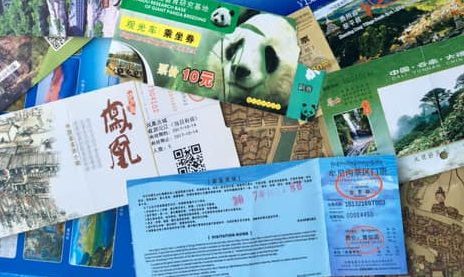
For many, Chinese attractions unexpectedly turn out to be a significant expense, comparable in size to the cost of accommodation or transportation. And it’s not just the price itself, but also the fact that in China, everything costs money: from a restored village to a sacred lake. Turnstiles, fences, and all that. 99.9% of the time, you won’t be able to squeeze through or walk through. You also won’t be able to hike well-known hiking trails like Tiger Leaping Gorge for free.
The entrance ticket itself is usually not enough; individual attractions within the park may cost extra: a section of the glass walkway, funiculars, elevators, trams, and entrance to some temples and pavilions. It might seem like I’ve already bought a park ticket and want to visit a temple within the park, but if the temple is particularly important, it will cost extra.
Furthermore, the prices for attractions in China are truly hefty.
Here are a few examples (prices are listed in yuan (元) – feel free to convert to your preferred currency).
- Zhangjiajie “Avatar Mountains”
Entrance with buses within the nature reserve = 248 元 (~$35)
Entrance + elevator up + cable car down = 392 元
In the same area, Tianmen Mountain (the one with a hole in it) is a separate attraction and costs 358 元 (~$50)
Entrance + cable car and glass bridge = 450 元 (~$65)
Glass bridge with descent into the canyon and ferry = 259 元 - Mount Hua (Hua Shan)
Entrance fee = 180元
Entrance + cable cars up and down + buses from them to the entrance + “death trail” = 490元 (~70$) - горы Уданшань
вход = 140元
вход + автобус + фуникулер на пик + пара храмов = 310元 - Соленое озеро Кукунор (платное озеро!) в восточном Тибете = 50-95元
- Yuan Yang rice terraces in Yunnan Province = 100-180元
- Longsheng rice terraces in Guilin = 80元 (12$)
- Jiaban rice terraces in Guizhou Province = free. For now. The province hasn’t been hyper-developed yet, so it’s high time to go with a guide to“Misty South”, using our readymade itinerary.
- fenghuang old town
Until recently, the entrance fee was 180 yuan, but now it has been cancelled. - Lijiang old town
The entrance fee has also been cancelled, but the city park with the lake still costs 80 yuan ($12) and there are so many turnstiles, as if you were trying to enter a military base. - Hakka villages, Diaolou towers, Dong minority villages = 100-150 元
And so on and so forth
What do you get for your money?
For your gold coins, you can enjoy the following at any reserve:
Free restrooms every 10-15 minutes, with washbasins, but naturally, almost always without paper.
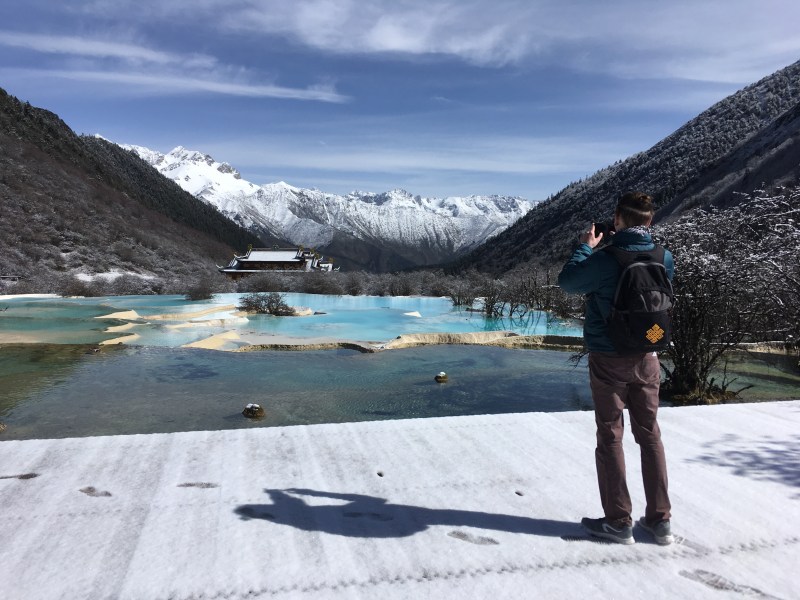
- Cable cars, elevators, escalators, steep glass suspension bridges and walkways that allow you to walk over waterfalls, abysses, and travertine terraces on the Tibetan plateau at an altitude of 3,600 meters; escalators carved into rock; and other technological marvels.
- Transportation within the reserve (sometimes included, sometimes for an additional fee, but included with the purchase of an entrance ticket).
- Free restrooms every 10-15 minutes, with washbasins, but naturally, almost always without paper.
- The steps and paths are stone and wooden, with railings, clean and tidy, with trash cans.
- Stalls sell instant noodles, boiling water (sometimes free, sometimes you can negotiate for a price), and other junk food that you can grab a quick bite to eat. Sometimes they even sell fruit, hot pancakes, and the like. At higher elevations, there are booths with oxygen tanks.
- Some places even have crappy Chinese Wi-Fi.
All this allows you to walk at a comfortable pace, wearing regular, comfortable shoes like sneakers, without equipment or heavy backpacks. Furthermore, knowing the national characteristics of Chinese tourism allows you to escape the crowds and stroll in silence.
Enjoy. Comment. Share.
And don’t forget that we have wonderful readymade itineraries that will save you time and money.


